Top Airport Lounges for Business Travelers in the US
Modern commercial air travel frequently introduces significant operational friction into executive routines. Flight delays, overcrowded terminal gates, limited power infrastructure, and ambient noise impair professional focus during transit. Airport lounge networks function as critical infrastructure for corporate travelers seeking predictable productivity, private meeting environments, stable high-speed connectivity, and restorative amenities between flights.
Access policies across North American airport lounges have undergone substantial operational restructuring. Rapid expansion in premium credit card membership, elite frequent flyer ranks, and corporate travel allowances created severe overcrowding across primary hub lounges. Operators responded by tightening access windows, restricting guest privileges, and constructing dedicated flagships aimed specifically at high-yield international business class passengers and top-tier frequent flyers.
Evaluating lounge quality requires looking past superficial luxury marketing or complimentary food displays. Corporate travel managers, frequent flyers, and enterprise executives must analyze the systemic drivers of transit efficiency. Aligning lounge access portfolios with primary flight routes guarantees functional workspace access without incurring unnecessary membership fees or unexpected terminal rejection.
This analytical reference guide examines airport lounge ecosystems, access economics, network coverage dynamics, and workplace infrastructure across major domestic hubs. By evaluating lounge categories, cost structures, risk factors, and governance protocols, this document serves as an authoritative reference for corporate travel directors, frequent flyers, and enterprise travel strategists.
Understanding “Top Airport Lounges for Business Travelers in the US”
Scope of Corporate Lounge Infrastructure
Evaluating the top airport lounges for business travelers in the us requires examining facilities across network coverage, ergonomic workspace design, digital connectivity speed, shower facility availability, and dedicated customer assistance support. Systemic lounge failure occurs when facilities experience extreme crowding, host inadequate quiet zones, or lack private phone booths for confidential corporate communications. Travel planners must assess lounge performance metrics continuously to maximize transit productivity.
Strategic Trade-Offs in Lounge Access
Balancing broad network accessibility against exclusive facility quality represents a recurring operational dilemma for business travelers. Multi-lounge membership programs offer broad regional access, but high guest volumes often trigger waitlists or restricted access during peak afternoon travel hours.
Primary Operational Friction Points
-
Flagship Executive Lounges vs. Standard Membership Clubs: Flagship international lounges provide restaurant-quality dining and quiet work suites, but restrict entrance strictly to premium long-haul ticket holders.
-
Financial Credit Card Access vs. Airline Status Loyalty: Premium credit cards grant flexible multi-airline lounge access, whereas airline status yields priority entry during capacity constraints.
-
Central Terminal Locations vs. Satellite Gate Distance: Centrally located flagship lounges offer superior amenities, but reaching distant departure gates requires significant terminal walking time.
Root Causes of Lounge Inefficiency
A primary driver of lounge dissatisfaction is entry queue congestion. Rapid increases in premium cardholders frequently overwhelm lounge capacity limits, forcing business travelers onto thirty-minute waitlists during critical work layovers.
Another frequent limitation involves poor acoustic control. Open-plan lounge designs without soundproof phone booths force passengers to conduct confidential business calls in public areas, creating ambient noise distractions for surrounding travelers.
Deep Contextual Background: Evolution of American Airport Lounges
From Private Drinking Clubs to Global Executive Workspaces
American corporate airport lounges originated as exclusive, membership-based private clubs introduced by legacy airlines during the late 1930s. Early facilities focused primarily on social comfort, beverage service, and quiet relaxation for prominent public figures and commercial aviation patrons. Basic telecommunications were limited to public payphones and shared desk space.
The deregulation of commercial aviation during the late 1970s and subsequent growth in corporate travel volume altered lounge operational dynamics.
Modern High-Performance Transit Havens
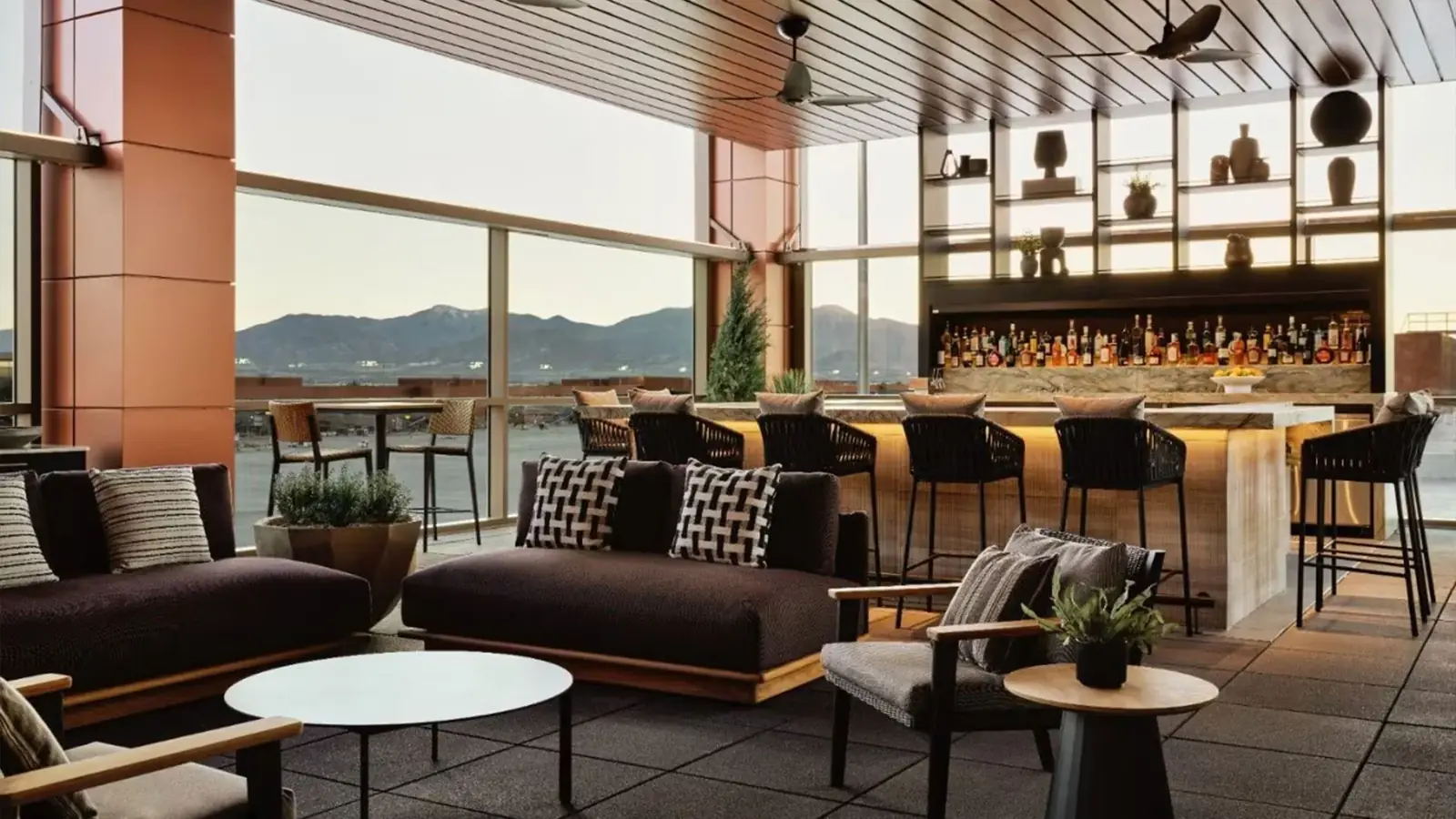
Modern airport lounges function as highly engineered transit workspaces. Major airline operators and financial institutions invest heavily in flagship facilities featuring private workstation pods, high-speed Wi-Fi networks, shower suites, curated dining options, and on-site customer service agents capable of handling complex flight rebookings.
Conceptual Frameworks and Mental Models
1. The Transit Productivity Index (TPI)
The TPI model measures operational workplace efficiency inside airport lounge environments:
Maximizing TPI metrics ensures that layover periods yield productive business outputs without introducing travel fatigue.
2. The Four Pillars of Business Lounge Utility
This model structures lounge assessments across four core functional capabilities:
Executing facility reviews across these four pillars prevents critical operational gaps when building corporate lounge access strategies.
3. The Lounge Ecosystem Taxonomy (LET)
The LET framework categorizes North American airport lounges by operational ownership and access model:
-
Legacy Airline Flagship Lounges (e.g., Polaris, Flagship First, Delta One): Premium sanctuaries offering fine dining and shower suites, reserved strictly for long-haul business class passengers.
-
Standard Airline Network Clubs (e.g., Admirals Club, United Club, Sky Club): High-density membership lounges offering reliable seating, snacks, and agent rebooking assistance across domestic flight hubs.
-
Independent Financial Lounges (e.g., Centurion, Sapphire Reserve, Capital One): Premium credit-card-funded lounges featuring elevated food menus and modern work spaces, subject to peak-hour capacity limits.
Key Categories and Market Variations
Systematically assessing top airport lounges for business travelers in the us requires organizing facilities by operational scope, network footprint, and primary user utility.
1. Airline Flagship Executive Suites
-
Key Characteristics: Restaurant-style à la carte dining, private shower suites, quiet nap rooms, and dedicated concierge agents.
-
Operational Trade-offs: Exceptional comfort and quiet working conditions offset by strict access rules limited to international business class tickets.
2. Financial Credit Card Networks
-
Key Characteristics: Chef-curated food buffets, craft cocktail bars, modern work pods, and multi-airline terminal access.
-
Operational Trade-offs: High facility standards across major domestic markets balanced against frequent crowding and strict three-hour pre-flight access windows.
3. Regional Membership Clubs
-
Key Characteristics: Widespread domestic hub coverage, consistent seating layouts, basic refreshments, and direct flight rebooking support.
-
Operational Trade-offs: High network accessibility and reliable agent assistance matched with variable food quality and higher crowding during weather delays.
Airport Lounge Network Comparison
| Lounge Category | Network Footprint | Workstation Quality | Culinary & Beverage Standard | Access Requirement |
| Airline Flagship Suites | Major Gateway Hubs | Superior (Private Suites) | Exceptional (À la Carte) | Premium International Ticket |
| Financial Card Networks | Core Domestic Airports | High (Modern Pods) | High (Chef Buffets) | Premium Credit Card |
| Standard Airline Clubs | Extensive US System | Moderate (Open Desks) | Standard (Snacks & Soups) | Annual Pass / Elite Status |
Detailed Real-World Scenarios
Scenario A: Managing a Four-Hour Irregular Operations Layover
-
Context: A management consultant experiences a four-hour flight delay at a major Midwest hub due to regional severe weather disruptions.
-
Constraints: Public terminal gates are severely overcrowded, power outlets are fully occupied, and customer service lines exceed one hundred passengers.
-
Decision Logic: The traveler accesses a legacy airline lounge using elite status, utilizes a quiet work booth to complete client deliverables, and leverages on-site lounge agents to secure a confirmed seat on an alternate flight.
-
Failure Mode: Remaining in open terminal areas leads to missed rebooking windows and lost billable working hours.
Scenario B: Conducting Confidential Executive Communications
-
Context: A financial director needs to host a sensitive video conference regarding quarterly earnings during an airport layover.
-
Constraints: Public airport areas introduce severe background noise and risk public disclosure of confidential corporate financial data.
-
Decision Logic: The director enters an independent financial lounge, reserves a fully enclosed soundproof phone suite, and executes the video meeting securely over encrypted Wi-Fi networks.
-
Failure Mode: Conducting confidential calls in open lounge seating areas compromises corporate privacy and distracts neighboring travelers.
Planning, Cost, and Resource Dynamics
Securing enterprise lounge access requires evaluating annual credit card fees, direct airline membership costs, single-entry passes, and opportunity costs associated with transit downtime. The table below outlines financial benchmarks across lounge access methods.
Lounge Access Financial Resource Dynamics
| Access Tier | Annual Financial Investment | Network Scope | Primary Operational Advantage |
| Premium Financial Cards | $395 – $695 annual fee | Multi-Carrier Independent | Modern workspaces and elevated food |
| Airline Club Memberships | $550 – $750 annual fee | Single Airline Systemwide | Priority agent flight rebooking |
| International Business Ticket | Included in airfare | Global Alliance Flagships | Unmatched quiet luxury and shower suites |
| Single Day Passes | $50 – $79 per visit | Selected Outstation Clubs | Low commitment for occasional travelers |
Tools, Strategies, and Support Systems
Optimizing airport lounge utility relies on integrating digital monitoring applications and strategic access protocols:
Core System Integrations
-
Lounge Capacity Tracking Applications: Utilizing mobile platforms to monitor real-time lounge waitlists and crowding metrics before navigating terminals.
-
Airport Terminal Navigation Tools: Deploying mapping software to calculate precise walking times between lounges and departure gates.
-
Corporate Expense Tracking Systems: Integrating membership fees into travel management software to evaluate cost against layover productivity.
-
Airline Rebooking Mobile Portals: Syncing lounge Wi-Fi credentials with mobile airline apps to secure instant flight updates.
Operational Strategies
-
Multi-Network Access Portfolios: Combining primary airline elite status with a premium financial credit card to guarantee lounge coverage across any airline itinerary.
-
Strategic Terminal Routing: Booking flight connections through hubs featuring accessible, high-capacity flagship facilities.
-
Off-Peak Layover Scheduling: Structuring flight connections during mid-morning or early afternoon windows to avoid peak lounge crowding periods.
Risk Landscape and Failure Modes
Relying on airport lounges without assessing network limitations or access rules introduces operational disruptions and schedule friction:
Primary Risk Vectors
-
Capacity Lockout Risks: High member density forces lounges to turn away pass holders or non-elite guests during peak travel afternoon hours.
-
Terminal Navigation Constraints: Lounges situated behind specific security checkpoints remain inaccessible to passengers departing from secondary terminals without airside train links.
-
Operational Schedule Shutdowns: Regional lounge facilities closing early in the evening leave late-night transcontinental travelers without workspace access.
Governance, Maintenance, and Long-Term Adaptation
Maintaining Access Governance
Corporate travel directors must establish structured governance frameworks to manage employee lounge access allowances and monitor productivity returns.
Program Governance Checklist
-
Monthly Expense Verification: Audit employee credit card expense submissions for duplicate or unnecessary lounge pass charges.
-
Quarterly Layover Productivity Review: Analyze employee travel logs to verify that funded lounge memberships correlate with high-density travel routes.
-
Bi-Annual Network Coverage Audit: Review corporate airline partner changes to align lounge access privileges with updated flight patterns.
-
Annual Policy Benchmark: Evaluate emerging independent lounge networks to update corporate travel allowance guidelines.
Measurement, Tracking, and Evaluation
Evaluating the impact of corporate lounge access programs requires monitoring quantitative travel metrics alongside qualitative employee feedback.
Quantitative Indicators
-
Layover Work Efficiency Rate: Billable working hours completed by traveling employees during airport layovers.
-
Flight Rebooking Success Yield: Percentage of delayed flights successfully rebooked through priority lounge agents versus standard phone channels.
-
Access Utilization Index: Total lounge visits executed per employee relative to annual membership subscription costs.
Qualitative Signals
-
Traveler Fatigue Surveys: Employee feedback measuring post-trip exhaustion levels following layovers with versus without lounge access.
-
Confidentiality Compliance Records: IT department reports evaluating security incidents involving remote corporate network connections at airports.
Common Misconceptions and Oversimplifications
Myth 1: All Airport Lounges Offer Superior Workspaces Compared to Public Gates
-
Correction: Heavily overcrowded lounges during peak hours can present higher noise levels and fewer available seats than quiet peripheral terminal gates.
Myth 2: A Premium Credit Card Guarantees Universal Airport Lounge Entry
-
Correction: Credit card lounge access remains subject to space availability, strict three-hour pre-departure rules, and specific terminal location barriers.
Myth 3: Lounge Access Is an Unnecessary Luxury Overhead for Business Travel
-
Correction: Factoring in billable working hours saved, quiet call capabilities, and rapid flight rebooking support transforms lounge access into a functional productivity investment.
Ethical, Practical, and Regulatory Considerations
Digital Data Privacy and Public Wi-Fi Security
Lounge Wi-Fi networks host hundreds of simultaneous connections. Business travelers must use corporate Virtual Private Networks and multi-factor authentication protocols to prevent local data interception.
Resource Sustainability and Waste Management
Major lounge operators manage massive food and beverage operations daily. Enterprise travel programs increasingly evaluate lounge partners based on single-use plastic reduction, food waste composting, and sustainable sourcing practices.
Conclusion
Evaluating the top airport lounges for business travelers in the us requires analyzing workplace ergonomics, network coverage density, entry rules, and priority agent support capabilities. Corporate travel leaders recognize that layover productivity depends heavily on quiet, well-equipped transit facilities.
By balancing airline status privileges with independent credit card networks, auditing terminal layouts, and leveraging priority agent assistance during irregular operations, business travelers turn unproductive layover time into valuable working hours.