Executive Dining Destinations USA: Corporate Strategy Guide
High-stakes corporate entertainment across major American commercial centers operates as a disciplined extension of enterprise strategy. The selection of a venue for a critical client dinner, board gathering, or M&A negotiation involves far more than simply securing a table at a critically acclaimed restaurant. Modern business leadership teams understand that the dining environment directly influences conversational velocity, participant comfort, and confidential deal flow. Venue choice functions as an explicit signal of organizational intent, corporate culture, and financial standing.
Navigating this specialized segment of the hospitality sector requires evaluating factors well beyond culinary scores or celebrity chef endorsements. Assessing premier executive venues demands a detailed examination of spatial acoustics, sightline privacy, private dining room logistics, wine list depth, and administrative billing discretion. A trendy, high-volume restaurant might deliver exceptional culinary output, yet fail completely as a business venue if ambient noise levels prevent confidential conversation. Conversely, an established private club may offer absolute acoustic isolation, while falling short in culinary innovation or modern dietary flexibility.
This editorial reference guide provides a structured framework for corporate event directors, chief of staff offices, executive assistants, and senior leaders. By examining venue categories, corporate expense governance, risk management, and venue selection mental models, this analysis provides an objective asset for managing corporate dining itineraries across key economic hubs.
Understanding “Executive Dining Destinations USA”
Defining Strategic Hospitality Architecture
The phrase executive dining destinations usa encompasses a vetted tier of commercial restaurants, private dining rooms, and institutional clubs engineered for corporate interaction. These establishments combine culinary excellence with deliberate privacy protocols. Evaluating these venues involves assessing how efficiently an environment supports business dialogue without exposing participants to unwanted observation or acoustic distraction.
Strategic Trade-Offs in Venue Selection
Securing an appropriate dining venue requires balancing competing priorities. A high-energy dining room offers a vibrant atmosphere for celebrating a completed transaction, yet hinders the delicate negotiations required beforehand. Executives evaluate key trade-offs when selecting a location:
-
Acoustic Control vs. Atmosphere: Quiet, carpeted private rooms versus high-energy main dining spaces.
-
Location Convenience vs. Privacy: Central business district access versus discreet suburban or perimeter sites.
-
Culinary Ambition vs. Predictability: Complex multi-course tasting menus versus classic steakhouse execution.
Overcoming Common Selection Errors
A frequent mistake in corporate hospitality planning is relying exclusively on consumer restaurant guides or popularity rankings. Public reviews measure consumer experience, focusing on theatrical presentation or social scene vibrancy. Corporate hosts require operational reliability, fast service pacing, and soundproof rooms.
Another common oversight is failing to verify private dining room (PDR) acoustics. A venue may market a private dining space that remains visually separated, yet allows noise from the main dining room to leak through thin partitions, compromising confidentiality.
Deep Contextual Background: Evolution of Business Entertaining
Shift from Expense-Account Indulgence to Strategic Alignment
Corporate dining historically centered on lavish, unstructured entertaining. The mid-century “three-martini lunch” operated as a relaxed social ritual where business deals were sealed over extended mid-day meals. Venue selection prioritized traditional steakhouses and exclusive men’s clubs that emphasized legacy prestige over culinary diversity or health considerations.
The evolution of corporate governance, tightened IRS expense deduction policies, and a focus on executive wellness changed these norms. Modern corporate dining focuses on time efficiency, privacy, and strategic alignment. Mid-day meals are often condensed, while high-stakes entertaining shifts to carefully structured dinners in private rooms designed for business discussions.
Architectural Adaptations in Hospitality Real Estate
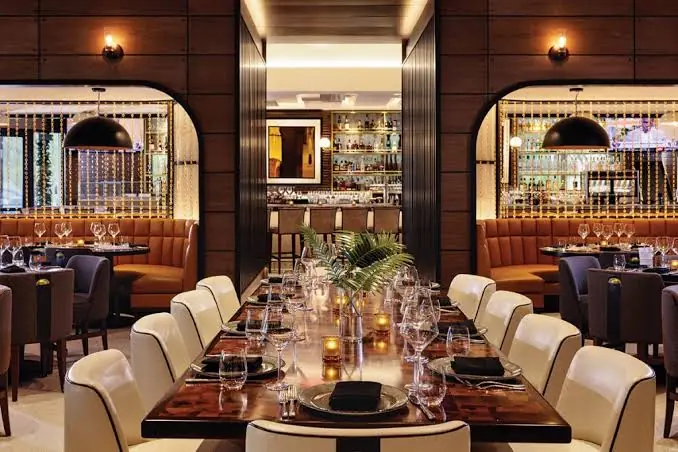
Restaurant developers and hospitality groups now design venues specifically for corporate clients. Modern restaurant blueprints regularly allocate significant floor space to soundproof private dining rooms with separate entrances, dedicated service kitchens, and integrated presentation technology.
In-room technology has adapted as well. Leading private dining spaces feature hidden flat-screen displays, wireless presentation systems, and acoustic dampening panels embedded within wall finishes, allowing seamless transitions from dinner to corporate slide decks.
Conceptual Frameworks and Mental Models
1. The Acoustic Confidentiality Index (ACI)
The Acoustic Confidentiality Index provides a practical model for assessing whether a venue supports confidential business discussions.
A high ACI score indicates a controlled environment where sensitive financial metrics or strategic plans can be discussed without risk of being overheard by adjacent diners.
2. The Spatial Discretion Model (SDM)
The Spatial Discretion Model evaluates a restaurant’s physical layout to ensure privacy for high-profile executives or sensitive negotiations:
Venues with dedicated private entries allow high-profile guests to arrive and depart without traversing crowded public dining rooms.
3. The Pacing and Friction Framework (PFF)
The Pacing and Friction Framework measures service efficiency during executive dinners:
-
Arrival Phase: Frictionless check-in and immediate seating without waiting at the bar.
-
Service Phase: Discrete waitstaff presence that delivers courses smoothly without interrupting active conversations.
-
Settlement Phase: Pre-arranged master billing that eliminates the need to present a physical credit card at the table.
Key Categories and Market Variations
Evaluating executive dining destinations usa requires grouping venues by their operational characteristics, atmosphere, and primary business utility.
1. Classic Financial Center Steakhouses
-
Representative Markets: New York (Midtown/FiDi), Chicago (Loop), Boston (Seaport).
-
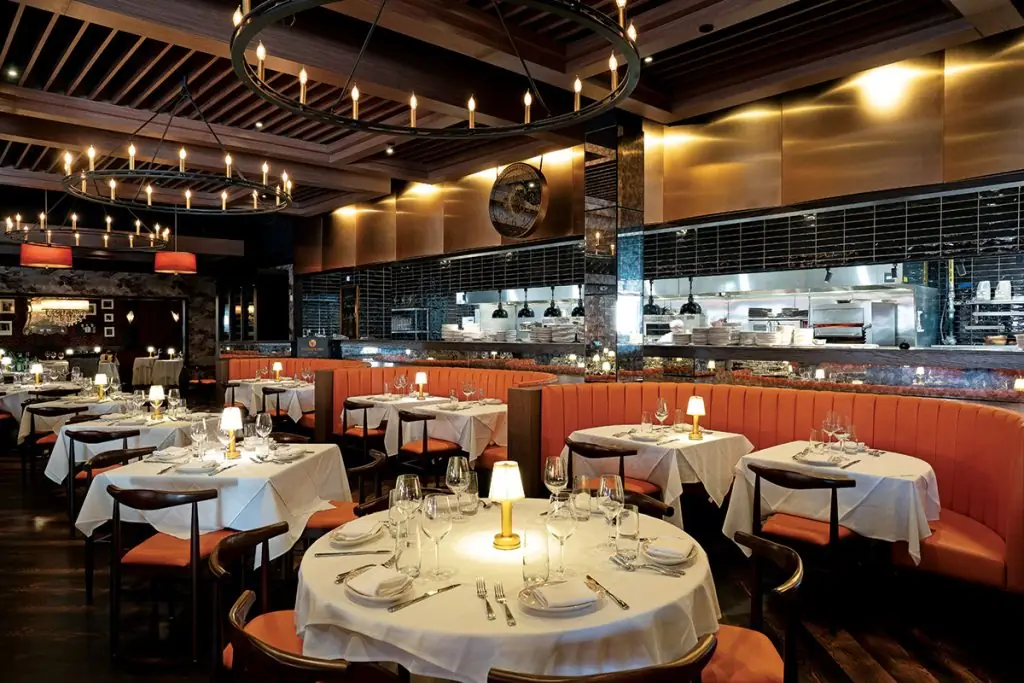
Characteristics: Traditional clubby interiors, prime beef offerings, deep wine cellars, highly experienced service staff.
-
Trade-offs: Traditional menus, high ambient noise in main rooms, higher expense profiles.
2. Modern Urban Fine Dining PDRs
-
Representative Markets: San Francisco, Chicago, New York, Seattle.
-
Characteristics: Innovative multi-course menus, sleek architectural design, soundproofed private rooms with integrated audiovisual capabilities.
-
Trade-offs: Longer meal durations, rigid tasting menu policies, high cancellation fees.
3. Historic Private City Clubs
-
Representative Markets: Washington D.C., Philadelphia, Boston, New York.
-
Characteristics: Exceptional physical security, strict dress codes, private meeting rooms, non-disclosure-minded staff.
-
Trade-offs: Membership requirements, conservative culinary styles, restrictive mobile device policies.
4. Coastal and Sunbelt Lifestyle Venues
-
Representative Markets: Miami (Brickell), Austin (Downtown), Los Angeles (Century City/Beverly Hills).
-
Characteristics: Indoor-outdoor dining layouts, seafood-forward menus, vibrant ambiance, contemporary decor.
-
Trade-offs: Elevated noise levels, variable table privacy, shifting trendy crowds.
Executive Dining Category Comparison
| Category | Primary Strategic Use | Acoustic Privacy | Service Style | Billing Integration |
| Classic Steakhouses | Relationship Building, Deal Closing | Moderate in Main Room / High in PDR | Traditional & Attentive | Seamless Corporate Accounts |
| Fine Dining PDRs | Board Dinners, Celebration Events | Very High (Dedicated Suites) | Formal & Sequential | Pre-paid Minimums Standard |
| Private City Clubs | Confidential Negotiations, Policy Meetings | Exceptional (Private Chambers) | Discreet & Institutional | Direct Member Billing |
| Sunbelt Venues | Informal Networking, Team Dinners | Variable (Requires Vetting) | Contemporary & Relaxed | Standard Credit Processing |
Detailed Real-World Scenarios
Scenario A: The M&A Closing Dinner in New York
-
Context: An investment banking team hosts a 14-person dinner in Manhattan to mark the completion of a major corporate merger.
-
Constraints: Requires absolute privacy, a customized wine pairing, and a quiet room for executive toasts and speeches.
-
Decision Logic: The host books a dedicated private wine cellar room at a flagship steakhouse, pre-selecting a fixed menu and establishing a master billing account.
-
Failure Mode: Booking a table in the main dining room leads to constant noise interruptions, preventing speechmaking and undermining the celebratory mood.
Scenario B: The Confidential Partner Negotiation in Washington D.C.
-
Context: Two corporate executives meet to negotiate sensitive joint venture terms without alerting industry competitors.
-
Constraints: Requires visual privacy, discrete arrival pathways, and a quiet setting with no time pressures.
-
Decision Logic: The host reserves a private dining alcove at an established private city club, arriving early to brief the service team.
-
Failure Mode: Selecting a trendy downtown bistro risks running into industry peers or reporters, compromising deal secrecy.
Planning, Cost, and Resource Dynamics
Budgeting for high-level corporate dining involves managing food and beverage minimums, administrative room fees, wine allocations, and service charges. The table below details investment expectations across major market categories.
Expense Structure Breakdown
| Venue Category | Per-Person Average (Food & Wine) | Private Room Minimum (PDR) | Service & Admin Charges | Cancellation Penalty Lead Time |
| Financial Steakhouse | $180 – $350 | $2,500 – $7,500 | 22% – 26% Total Bill | 72 Hours Standard |
| Fine Dining PDR | $250 – $600 | $4,000 – $15,000 | 24% – 28% Total Bill | 7–14 Days Required |
| Private City Club | $120 – $250 | $1,500 – $4,500 | 20% – 22% Total Bill | 48 Hours Standard |
| Sunbelt Lifestyle | $150 – $300 | $2,000 – $6,000 | 22% – 25% Total Bill | 72 Hours Standard |
Tools, Strategies, and Support Systems
Managing high-stakes corporate dining itineraries relies on specialized operational strategies and booking frameworks:
-
Corporate Account Networks: Establishing direct corporate accounts with hospitality groups to secure priority reservations, direct invoicing, and waived room fees.
-
Advance Dietary Screening Protocols: Collecting dietary preferences and restrictions from guests in advance to streamline menu preparation.
-
Pre-Set Menu Architecture: Establishing fixed multi-course menus to control meal pacing and avoid lengthy ordering delays during business discussions.
-
Master Card Authorization Contracts: Executing credit card authorization forms ahead of time to ensure bills are settled silently without bringing physical leather check presenters to the table.
Risk Landscape and Failure Modes
Corporate dining events carry operational, financial, and reputational risks. Understanding potential failure points allows event managers to protect corporate interests:
-
Acoustic Vulnerabilities: Inadequate room soundproofing allows sensitive financial discussions to be overheard by guests in adjacent areas.
-
Service Bottlenecks: Slow food execution disrupts tight meeting schedules and creates friction during long discussions.
-
Dietary Missteps: Failing to accommodate guest allergies or dietary restrictions creates awkward moments and discomfort.
-
Payment Friction: Handling payment at the table can create awkward moments; bills should always be processed automatically behind the scenes.
Governance, Maintenance, and Long-Term Adaptation
Establishing Corporate Hospitality Guidelines
Organizations benefit from establishing clear guidelines for executive dining. Structured corporate policies ensure entertainment spending aligns with compliance rules, tax regulations, and internal governance standards.
Executive Dining Vetting Checklist
-
Acoustic Check: Confirm the private room features solid doors and sound-dampening wall panels.
-
Service Pacing Agreement: Review dinner timing expectations with the restaurant captain beforehand.
-
Pre-Paid Billing Set Up: Confirm that credit card authorizations are completed prior to guest arrival.
-
Dietary Confirmation: Reconfirm guest dietary needs with the culinary team 24 hours prior to the event.
Measurement, Tracking, and Evaluation
Corporate event teams should evaluate dining venues using both quantitative financial data and qualitative executive feedback.
Quantitative Indicators
-
Budget Variance: Comparing final invoices against initial contracted quotes, tracking food, wine, and gratuity overages.
-
Time Efficiency: Tracking actual meal durations against planned schedules to assess service pacing.
Qualitative Signals
-
Executive Feedback: Surveying hosts and guests on room acoustics, privacy, service attentiveness, and meal quality.
-
Relationship Impact: Assessing whether the dining environment supported positive conversation and deal progression.
Common Misconceptions and Oversimplifications
Myth 1: Higher Prices Guarantee Better Business Privacy
-
Correction: High menu prices reflect ingredient costs and brand prestige, not room acoustics or privacy. Expensive open dining rooms can be loud and poorly suited for business talks.
Myth 2: Ordering Alcohol Is Mandatory for Corporate Dinners
-
Correction: Modern corporate dining increasingly emphasizes wellness and inclusion, with premium non-alcoholic beverage pairings now standard at top venues.
Myth 3: Private Rooms Are Only Needed for Large Groups
-
Correction: Small groups of two to four executives discussing sensitive acquisitions or personnel matters often require private rooms to ensure confidentiality.
Ethical, Practical, and Regulatory Considerations
Corporate Compliance and Anti-Bribery Standards
Corporate entertainment must comply with legal standards such as the Foreign Corrupt Practices Act (FCPA) and internal corporate governance policies. Gift and entertainment limits strictly govern the value of meals provided to public officials, healthcare professionals, or procurement officers, requiring accurate recordkeeping and pre-approval for high-cost dinners.
Tax Deductibility Nuances
Corporate finance teams must carefully track dining expenses under IRS regulations. Business meal deductibility rules vary based on whether the meal includes business discussions, who attends, and whether expenses are considered lavish or extravagant. Accurate itemized receipts are required for tax compliance.
Conclusion
Evaluating executive dining destinations usa requires looking beyond culinary accolades to assess privacy, acoustic control, service pacing, and billing discretion. High-performing business venues function as controlled environments designed to facilitate clear communication and protect confidential discussions.
By applying structured vetting models, establishing pre-set menus, and automating billing processes, corporate hosts can create seamless dining experiences that support organizational goals, build strong client relationships, and protect corporate interests.